


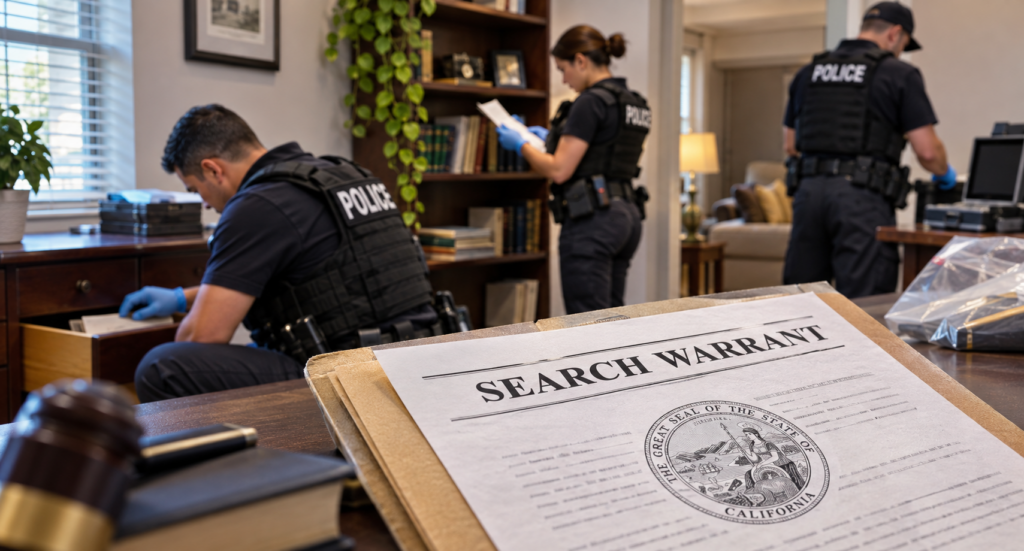


Police officers are legally permitted to use force in certain situations. An officer may need to restrain someone who is resisting arrest, protect another person from an immediate threat, or respond to a dangerous confrontation. However, the authority to use force is not unlimited. When the amount or type of force used is unreasonable under the circumstances, it may cross the line into excessive force.
For someone involved in an arrest, the distinction can be extremely important. An encounter may happen quickly, and the person being arrested may come away injured, facing criminal charges, or both. The police report may describe resistance or threatening behavior, while body-camera footage, witness statements, medical records, or other evidence may tell a more complicated story.
Understanding police excessive force, the rules governing law enforcement use of force, and how allegations of excessive force can affect a criminal case is therefore an important part of protecting your rights. If you are accused of a crime following a confrontation with law enforcement in Southern California, the circumstances surrounding the officer’s actions should be carefully examined rather than automatically accepted as described in an arrest report.
What Is Considered Excessive Force?
In general, excessive force occurs when law enforcement uses more force than is objectively reasonable under the circumstances. There is no single formula that determines exactly how much force is permissible in every encounter. Instead, the facts surrounding the incident must be considered.
The United States Supreme Court established an important framework for these cases in Graham v. Connor. Under the Fourth Amendment, claims involving excessive force during an arrest, investigatory stop, or other seizure are generally evaluated under an “objective reasonableness” standard. Courts consider the situation from the perspective of a reasonable officer at the scene rather than simply judging the incident with hindsight.
That does not mean that any force used during an arrest is automatically reasonable. Courts may consider factors such as the seriousness of the suspected offense, whether the person presented an immediate safety threat, whether the person was actively resisting, and whether the person was attempting to flee.
Context matters. Force that may be reasonable against an armed person actively threatening others could be unreasonable against an unarmed person who is already restrained and complying with officers. The question is not simply whether officers had a right to make an arrest. The question is whether the level of force used by police was reasonable under the circumstances at the time it was used.
California Law Places Limits on Police Use of Force
California law also establishes standards governing when peace officers may use force. Under California Penal Code Section 835a, officers may use objectively reasonable force to make an arrest, prevent an escape, or overcome resistance. The law also establishes stricter requirements governing deadly force.
California law recognizes that officers sometimes have to make rapid decisions in dangerous and evolving situations. At the same time, that authority does not give an officer unlimited discretion to inflict injury. Whether force was justified depends heavily on what was happening when the force was used.
This distinction becomes especially important when circumstances change during an encounter. Force that might initially have been justified may become unreasonable if the threat has ended. For example, restraining someone who is actively fighting with officers presents a different legal question from continuing to strike someone who has stopped resisting and has been brought under control.
That is why a California excessive force case cannot usually be evaluated from one isolated moment. The sequence of events matters.
What Can Excessive Force Look Like During an Arrest?
Excessive force does not refer to one specific police tactic. Depending on the circumstances, allegations can involve punches, kicks, takedowns, restraint techniques, Tasers, impact weapons, police dogs, firearms, or other forms of physical force.
The fact that someone was injured also does not automatically establish police misconduct. A person can suffer an injury during an arrest even when reasonable force was used. Likewise, an officer does not necessarily have to cause a catastrophic injury before force can become legally unreasonable. The analysis focuses on the force used and the circumstances surrounding it.
Imagine, for example, that officers are attempting to arrest someone who is actively fighting, reaching toward a suspected weapon, or trying to attack another person. Significant force may be justified to control the immediate danger. Compare that with a suspect who has been handcuffed, is following instructions, and is no longer presenting a threat. Continued physical force under the second set of circumstances raises very different questions.
Other cases fall somewhere between these examples. A person may pull an arm away instinctively, misunderstand a command, experience difficulty physically complying, or initially resist before eventually surrendering. Determining whether an officer’s response was reasonable may require a detailed reconstruction of exactly what happened and when.
Excessive Force Can Matter in the Criminal Case Against You
One of the most important misconceptions about police excessive force is that it is only relevant to a separate civil rights lawsuit. When a person is also facing criminal charges, the conduct of the officers can potentially become relevant to the defense as well.
California’s criminal jury instructions recognize this issue. CALCRIM No. 2670 explains that a peace officer is not lawfully performing his or her duties when the officer is unlawfully arresting or detaining someone or using unreasonable or excessive force in making or attempting to make an otherwise lawful arrest or detention.
That can become particularly significant when a charge requires prosecutors to establish that an officer was lawfully performing official duties. Allegations involving resisting arrest, obstructing an officer, or certain offenses arising from a physical confrontation with police can require careful examination of whether the officer was acting lawfully.
This does not mean that an allegation of excessive force automatically causes criminal charges to disappear. Each offense has its own elements, and the facts must be analyzed individually. However, when the legality of the officer’s conduct is relevant to an element of the charged offense, evidence of unreasonable force may become an important part of the defense.
The Evidence Can Tell a Different Story From the Police Report
An officer’s written account is evidence, but it is not necessarily the complete record of what happened. A strong criminal defense investigation may require looking beyond the police report to reconstruct the encounter from multiple sources.
Body-camera footage can be particularly important because it may document commands, responses, physical movements, the timing of force, and what happened immediately before and after an arrest. Patrol-car video, surveillance cameras, cell phone recordings, photographs, dispatch recordings, and witness testimony may provide additional perspectives.
Medical evidence can also matter. Emergency room records, photographs of injuries, diagnostic imaging, and treatment records may help establish when and where injuries occurred. Clothing or damaged personal property may sometimes provide additional evidence.
Timing is especially important because some evidence can disappear. Surveillance systems may overwrite recordings. Witnesses may become difficult to locate. Physical injuries heal. Memories become less precise. When an arrest involves allegations of unreasonable police force, preserving evidence as soon as possible can be critical.
What Should You Do After an Alleged Excessive Force Incident?
If you are facing criminal charges after a confrontation with police, one of the most important steps is to avoid making unnecessary statements about the incident without first speaking with an attorney. What you say about the arrest can potentially affect both the criminal allegations and any separate claim concerning the officers’ conduct.
Documenting injuries is also important. Appropriate medical care serves the obvious purpose of protecting your health, but medical records can also establish the nature and timing of injuries. Photographs taken during the healing process may document bruising, swelling, cuts, or other visible injuries that look very different several days later.
You should also preserve anything related to the encounter. That may include photographs, videos, damaged clothing, names of witnesses, messages sent immediately after the incident, or information identifying nearby businesses or residences that may have surveillance cameras.
A defense attorney can then evaluate what additional evidence may need to be obtained, including police body-camera footage, dispatch information, reports, witness statements, and other records. The objective is to understand the entire encounter rather than relying solely on the government’s version of events.
What Legal Options May Be Available?
The appropriate legal strategy depends on why the person was stopped, what happened during the encounter, what charges were filed, and what evidence exists. From the criminal defense perspective, the first priority is determining how the officer’s conduct affects the prosecution’s case.
If prosecutors allege that you resisted, obstructed, threatened, or assaulted an officer, for example, the defense may need to investigate whether the officer was lawfully performing his or her duties and whether the force being used was reasonable. Video evidence and witness testimony can become especially important when the prosecution and defense disagree about who escalated the confrontation.
An alleged Fourth Amendment violation or other unlawful police conduct can also raise legal issues that require careful examination based on the facts of the case. Not every violation produces the same remedy, and excessive force does not automatically invalidate an otherwise lawful arrest or require dismissal of unrelated criminal charges.
Separately, people injured by police misconduct may have potential civil remedies. Federal civil rights law provides mechanisms for addressing certain constitutional violations by government officials, and the U.S. Department of Justice also investigates certain patterns or practices of law enforcement misconduct.
Civil claims against public entities and public employees can involve strict procedural requirements and deadlines. Anyone considering a civil claim should therefore seek advice about those issues promptly rather than assuming the ordinary deadline for a lawsuit applies.
Why the Details of the Encounter Matter
Excessive force cases are highly fact-specific. Small details can substantially change the legal analysis. Was the person armed? Did officers reasonably believe the person was armed? Was a command clearly given? Was the person actively resisting or merely unable to immediately comply? Was someone attempting to flee? Had the suspect already been restrained? Did the officer continue using force after the perceived threat ended?
The timeline can be just as important as the individual facts. A confrontation may begin with force that appears justified but evolve into a situation in which additional force becomes questionable. Conversely, video evidence may show that an officer faced a threat that was not apparent from a witness’s limited viewpoint.
At Grech, Packer & Hanks, we look closely at these details when defending clients whose criminal cases involve disputed interactions with law enforcement. The legality of police conduct should not simply be assumed because an arrest occurred. When excessive force during an arrest may have affected the encounter or the resulting charges, the available evidence deserves careful scrutiny.
Frequently Asked Questions About Excessive Force
Questions about police excessive force in California often arise at the same time as questions about an arrest or pending criminal charges. The answers depend on the circumstances, but several issues come up frequently.
Is any injury during an arrest considered excessive force?
No. Police officers are permitted to use reasonable force under appropriate circumstances, and sometimes a lawful use of force results in injury. An injury can be important evidence, but the existence of an injury alone does not establish that the officer acted unlawfully.
The central issue is whether the amount and type of force were reasonable considering the circumstances confronting the officer.
Can police use force if I resist arrest?
Officers may generally use reasonable force to overcome resistance, but that does not mean every level of force becomes lawful merely because resistance occurred.
The nature of the resistance, threat presented, circumstances of the arrest, and amount of force used can all matter. There can also be important factual disputes about what officers characterize as resistance.
Will excessive force automatically get my criminal charges dismissed?
No. Police misconduct does not automatically result in dismissal of criminal charges. The legal consequences depend on the offense charged and how the officer’s conduct relates to the elements of that offense or other issues in the case.
However, excessive force may be especially relevant when lawful performance of an officer’s duties is an element the prosecution must prove. That is one reason the entire arrest should be evaluated by a criminal defense attorney rather than considering the force allegation separately.
What if body-camera footage contradicts the police report?
A meaningful discrepancy between video evidence and an officer’s written account may be important. The significance depends on what the contradiction involves and how it relates to the criminal charges.
An attorney can compare reports, video, witness testimony, medical evidence, and other available records to determine whether inconsistencies can be used in the defense.
Accused of a Crime After an Encounter With Police? Let Us Defend You!
Facing criminal charges is already overwhelming. When those charges arise from an encounter in which you believe police used unreasonable or excessive force, the situation can become even more complicated. You may be dealing with injuries while simultaneously trying to understand an arrest report that describes the confrontation very differently from how you remember it.
At Grech, Packer & Hanks, our Riverside criminal defense attorneys understand that effective representation requires more than reading the allegations and accepting the prosecution’s version of events. We examine the legality of law enforcement procedures, the evidence and witnesses supporting the government’s case, the circumstances surrounding the arrest, and the strengths and weaknesses of the prosecution’s theory. Our attorneys have handled hundreds of jury trials, and our team includes a Certified Specialist in Criminal Law.
When police use of force is part of the case, evidence must be examined carefully and as early as possible. Video footage, medical documentation, witness accounts, police reports, and the sequence of events may all affect how the case should be defended. The sooner the defense begins investigating what happened, the better positioned your attorney may be to preserve evidence and challenge unsupported allegations.
If you or a loved one has been accused of a criminal offense following an encounter with law enforcement in Southern California, do not wait to understand your options. Contact Grech, Packer & Hanks to discuss your case and begin building your defense. Contact us online or call 951-682-9311.